Journal · 7 August 2026
How we keep a Fibonacci chart from becoming a pile of lines
The charts that help in the Incheon room are the ones with room left on the paper. This is the marking habit we use in the Tuesday studio.
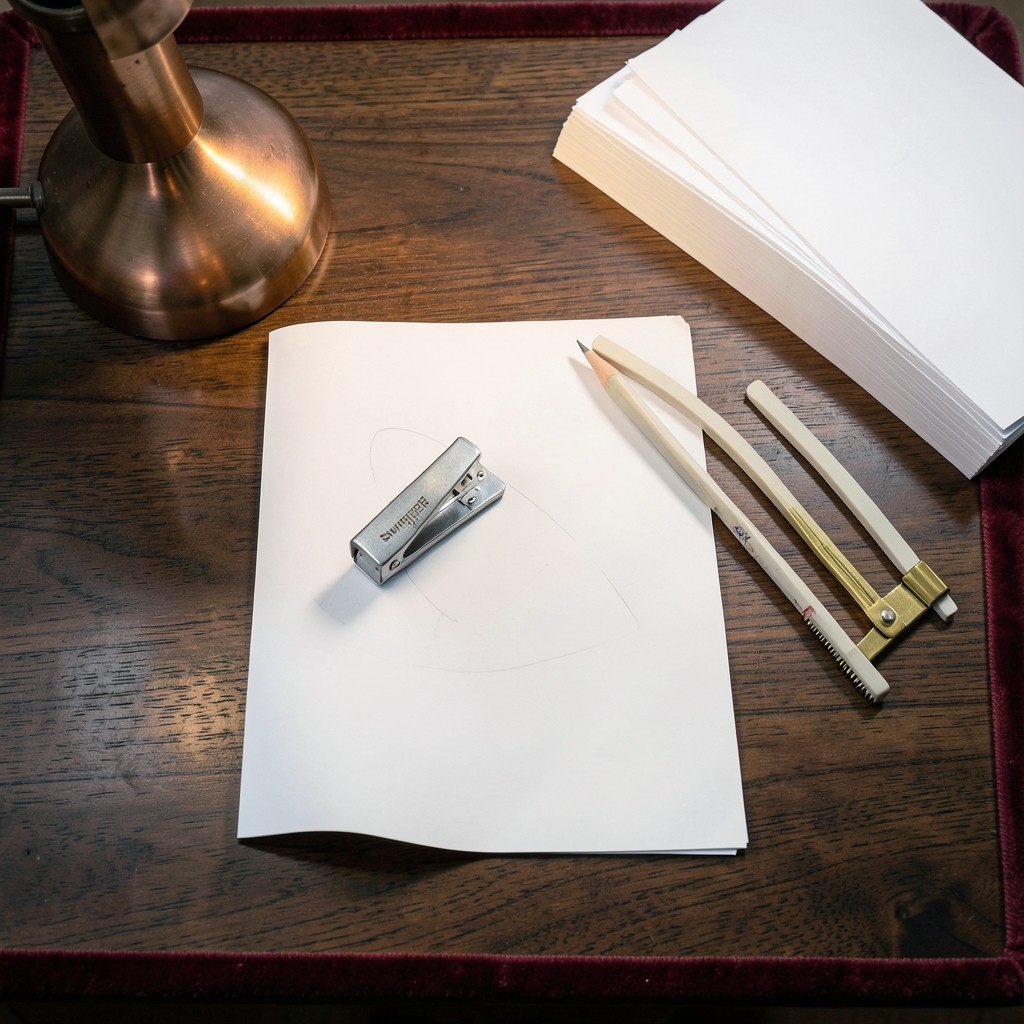
One swing on the sheet
A Fibonacci retracement needs two prints and a reason those prints matter. When a second swing sneaks onto the same sheet, the ratios start to argue with each other. The studio rule is physical. The swing is drawn in copper pencil. Everything else is graphite. If you reach for the copper pencil twice, you start a second sheet.
Students who arrive from a screen covered in ratios often feel the paper is too empty. That emptiness is the point. You should be able to cover the ratios with a hand and still tell a visitor which way the swing ran and where it would be cancelled.
A set, not a menu
We do not drop 0.236, 0.382, 0.5, 0.618, and 0.786 on every swing by habit. A shallow correction gets 0.382 and 0.5. A deep one gets 0.618 and 0.786. The 0.5 is kept in the shallow set because desks have used it for decades, even though it is not a Fibonacci ratio. We say that out loud so nobody treats it as a secret level.
Choosing a set is part of the training. The unused ratios are not wrong in the abstract. They are wrong on this sheet because they were not earned by the swing in front of you.
The cancel note
Every sheet ends with one sentence. A close through the origin of the swing cancels the map. Sometimes the sentence is tighter, such as a cash-session close beyond the anchor rather than a wick. The sentence is written before anyone talks about what they might do if price arrives at a ratio.
At the end of the evening the graphite that has no sentence is erased. The copper line usually stays. People photograph nothing. They take the paper.